For a while, the frontier seemed overdone. Every setting had been used: the same cattle drives, the same gunfights at high noon, the same tired archetypes. Publishers turned to WWII epics and Regency romances, leaving Western historical fiction quietly on the back shelf.
That’s changing. In 2026, readers are returning to the genre, not because they feel nostalgic, but because they’re tired of the same old settings and want something that still feels new.
Readers Are Tired of the Same Three Time Periods
If you walk into any bookstore’s historical fiction section, you’ll see plenty of titles set in 1940s Europe or Victorian London. That overload is why the frontier is getting another look. It’s not about trends but about exploring one of the last big parts of American history that hasn’t been overused.
Texas in the 1830s and 40s alone has enough material for many genres: a fight for independence, a young republic figuring out its own laws, and many cultures- Anglo settlers, Mexican families, Comanche and Kiowa nations- all trying to share or fight over the same land. That isn’t space. It’s just underused.
Real Stakes Instead of Invented Ones
Many readers are also tired of fantasy and dystopian stories right now. They’re interested in stories where the danger was real, the history actually happened, and the people involved had names, families, and consequences that lasted a lifetime.
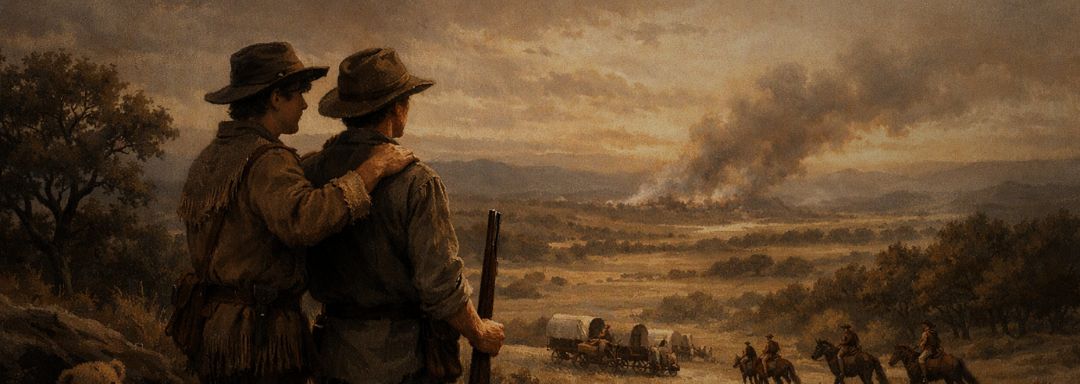
Logan by Austin Thomas captures exactly that feeling. It starts in the smoke and confusion of the Battle of San Jacinto, not as a stylized scene, but as an eighteen-year-old caught in the chaos, his ears ringing from a cannon blast and his eyes full of dirt. There’s no fake tension added for drama. The real tension comes from the history itself: the fall of the Alamo weeks before, Goliad, the Runaway Scrape, and Santa Anna’s army closing in on families with nowhere left to go. Readers who want these real stakes are the ones bringing the genre back.
Frontier Stories Are Finally Getting More Honest
One reason older Westerns lost popularity is that they relied too much on flat stereotypes, showing settlers as heroes and Native nations as obstacles. That version of the genre hasn’t aged well, and readers recognize it.
What’s drawing people back is fiction that does the harder work: showing Comanche and Kiowa characters as real people with their own politics, loyalties, and reasons, not just as background. In Logan, this comes through in characters like Yellow Wolf, a Comanche scout with his own suspicions, rivalries, and choices. He makes decisions for his own reasons, not just to move the plot. It’s a small change, but it’s what separates a dated Western from one that feels honest.
Friendship Carries These Stories More Than Gunfights Do
Ask anyone who’s read a good Western novel what they remember, and it’s rarely the shootouts. It’s usually the relationships- the people who left home together and had to rely on each other to survive.
That’s the heart of Logan too. Before any battle, Logan and his cousin Will Magill are packing up in Kentucky, teasing each other about who’s slower to decide, and promising Logan’s mother to look out for each other. That relationship drives the rest of the book. It reminds us that frontier fiction was never really about the frontier; it’s about who you’d choose to face it with.
Audiobooks Are Bringing In Readers Who’d Never Pick Up a Western
There’s another reason for the genre’s return: more people are listening to books than ever, and audiobooks are attracting readers who might not pick up a Western in print. A well-narrated frontier story, read aloud, feels different. The slower pacing and dialogue-heavy scenes that might seem old-fashioned on the page often work better in audio.
Where Logan Fits Into All of This
Logan isn’t trying to bring back the old formula. It tells the true, mostly forgotten story of a man who fought at San Jacinto, spent ten years as a Texas Ranger, and helped build Burnet County from nothing, while treating the Comanche and Kiowa people in his life as more than just a background threat. That mix- real history, real relationships, and a more honest look at who was actually on the frontier- is exactly what’s drawing readers back to this genre.
If you’ve been coming back to Western historical fiction lately, or you’re new to it and wondering where to start, Logan is a great place to begin. You can also read more about what makes Logan connect with readers, the timeless themes in the genre, and what frontier life was really like for the people who lived it.